Dr. Gymbro
←

#ergogenic aids

25 articles
supplements

L'eau hydrogénée rend les nageurs d'élite 0,6 % plus rapides. Le hic

BY DR. GYMBRO ·

Un verre d’eau contenant du gaz hydrogène dissous a rendu les nageurs de palmes de niveau national 0,6 % plus rapides sur 400 m lors d’un essai en double‑aveugle croisé. Cela paraît négligeable, mais à ce niveau, cela peut faire basculer le podium. Le même protocole n’a eu aucun effet sur les sprints répétés de 50 m, le lactate sanguin, la perception d’effort ou le stress oxydatif, laissant le mécanisme inexpliqué. Vous découvrirez la dose exacte, qui pourrait en bénéficier, et pourquoi il faut aborder cette petite étude de 12 athlètes avec prudence.

science research

Le boost de sprint de la caféine a duré 3,5 heures – et les sprints font moins mal

BY DR. GYMBRO ·

Une forte dose de caféine ne s’est pas dissipée après le premier set. Selon une nouvelle étude de l’Université de Tsukuba, 5,5 mg/kg prises environ une heure avant l’effort ont permis de maintenir la puissance des sprints répétés pendant jusqu’à 3,5 heures. Les sprints ont également semblé moins douloureux et moins éprouvants. Les gains étaient modestes (0,5‑3,7 %) et observés chez seulement 12 participants, accompagnés d’une élévation du rythme cardiaque et d’une réduction de la vitesse du flux sanguin cérébral.

nutrition

300 mg de caféine ont rendu les footballeurs plus rapides, mais pas plus réactifs

BY DR. GYMBRO ·

Tout le monde suppose que la caféine rend les athlètes plus vifs partout, mais une étude en double‑aveugle menée auprès de footballeurs amateurs montre un tableau plus nuancé. Une dose de 300 mg (≈ 3,7 mg/kg) a amélioré l’agilité planifiée (taille d’effet 0,62) et augmenté la hauteur de saut, tandis que les bénéfices sur l’agilité réactive restent faibles ou non significatifs. Voici les principales conclusions, leur interprétation et les profils qui pourraient réellement en profiter.
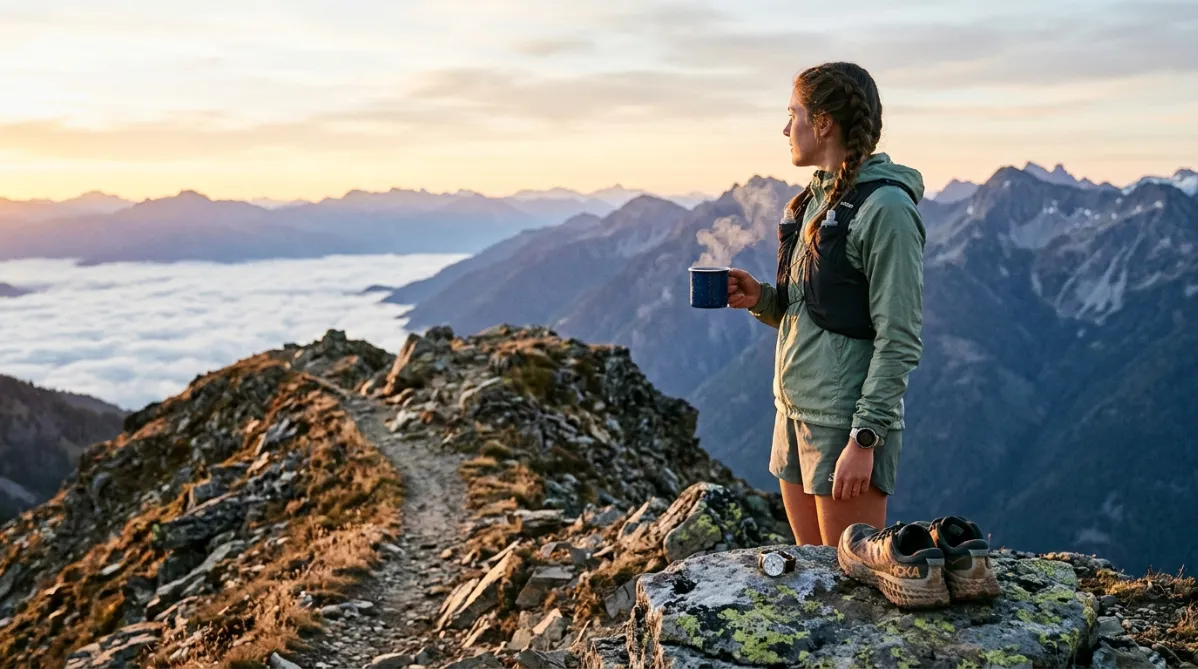
A lone trail runner pauses on a high alpine ridge at dawn, holding a small enamel camp mug of steaming coffee, with thin ribbons of steam curling into crisp, cold air. She wears a fitted charcoal running vest and a muted sage windbreaker, and her breath is faintly visible. Behind her, layered mountain ranges fade into soft blue and lavender haze, and a sea of low clouds fills the valley below. Warm golden sunlight skims the ridgeline and rim-lights her profile, shoulders, and the rising steam. In the foreground, a scattering of dried alpine grasses and lichen-covered stones is in sharp focus, with a worn trail snaking toward the summit. Near the mug sits a small pair of trail running shoes with dusty soles and a simple analog wristwatch resting on a flat rock.

The composition follows a wide 16:9 editorial layout. The subject sits slightly right of center on the rule of thirds, leaving generous negative space in the pale peach-and-powder-blue sky on the left, where headline text could sit. The palette is restrained and modern: warm amber, soft cream, dusty sage, slate blue, and a touch of terracotta. The look is cinematic but natural, with shallow depth of field on the foreground details, gentle film grain, and a slightly matte finish. It evokes a high-end outdoor lifestyle magazine or a contemporary wellness journal. The mood is calm, focused, and quietly determined, capturing the contrast between thin, cold altitude air and the warmth of a coffee ritual. The image has no text, logos, or futuristic elements, and no gym equipment, only natural light, texture, and atmosphere.
nutrition

Caféine en haute altitude : le boost d’endurance que l’hypoxie ne peut pas effacer

BY DR. GYMBRO ·

L’air raréfié diminue nettement la capacité d’endurance, mais une méta‑analyse récente montre que la caféine pourrait récupérer une partie de cette perte. En regroupant neuf études croisées contrôlées par placebo (117 participants), les chercheurs ont observé un gain de performance modéré à important en hypoxie (g = 0,76). Curieusement, la saturation en oxygène et la perception de l’effort n’ont pas changé, tandis que la fréquence cardiaque, le lactate sanguin et la ventilation ont augmenté. Le niveau de preuve reste faible et seules 19 femmes ont participé, ce qui fait de ces résultats une piste prometteuse plutôt qu’une certitude. Voici qui pourrait en profiter, qui devrait l’éviter, et comment envisager dose et timing.
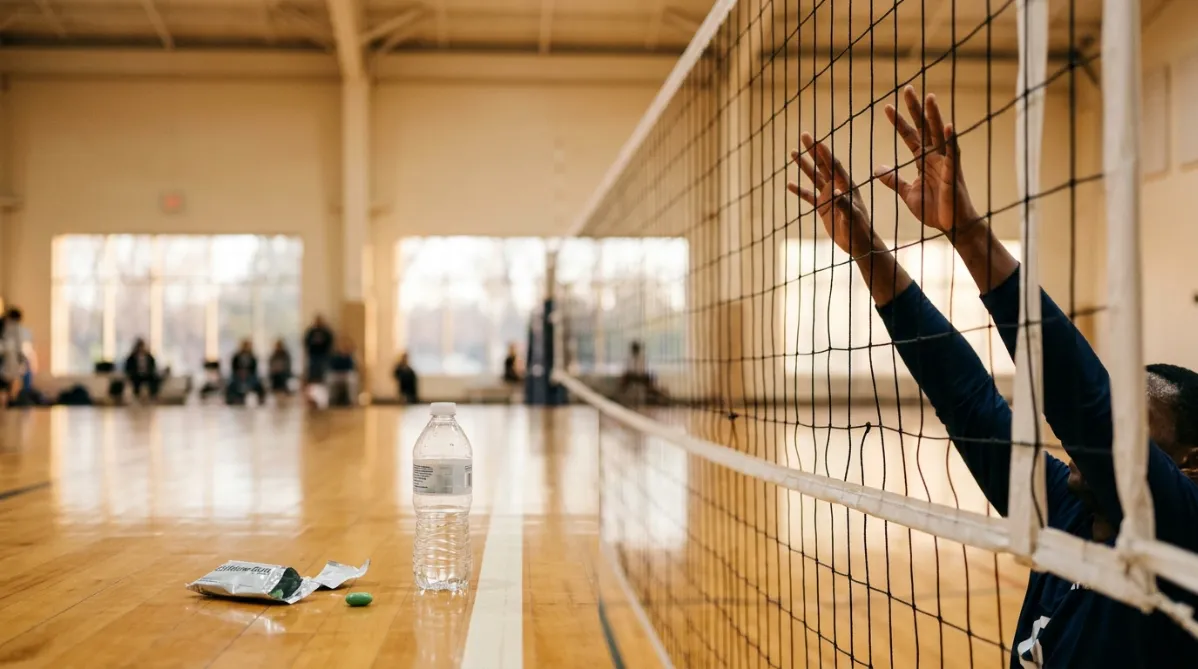
A landscape editorial photograph of a volleyball net in a softly lit indoor gym, shot from a low angle on the court. In the foreground, a pair of athletic hands in mid-block reach above the net, fingers spread, caught in crisp focus. The athlete's face is out of frame, so the attention stays on the hands and the net. In the lower left foreground, a small open foil pack of caffeine chewing gum sits on the polished maple floor, with two mint-green gum pieces beside it and a clear water bottle. The pack is unbranded and minimal.

The background is a warm blur of honey-toned hardwood, pale gym walls, and tall windows with diffused late-afternoon light streaming in. Dust motes glow in the light shafts. The palette is muted and modern: warm wood amber, soft cream, sage green, and a touch of deep navy from the athlete's jersey. Shallow depth of field and gentle film grain give the image a refined, magazine-like feel. The composition follows the rule of thirds, with the hands and net on the right and open negative space on the left, where headline text could sit.

The mood is calm, focused, and slightly cinematic, like a feature in a contemporary sports science journal. The lighting is soft and natural, with long gentle shadows across the court lines. No futuristic or digital elements, no charts, no text. The overall look is clean, tactile, and editorial.
nutrition

Fatigue : les temps de réaction ralentissent de 18 %. Le chewing‑gum à la caféine ne les réduit qu’à 3 %

BY DR. GYMBRO ·

Après un protocole de fatigue très exigeant, les joueuses de volleyball d’élite sous placebo ont vu leurs temps de réaction augmenter de 18,4 %. Un chewing‑gum contenant 6 mg/kg de caféine n’a limité ce ralentissement qu’à 3,0 %, tandis que 3 mg/kg n’ont entraîné qu’une hausse de 6,4 %. La puissance au saut‑bloc et la raideur du saut‑dégressif se sont également mieux maintenues avec la caféine. L’étude, toutefois, ne comporte que 15 athlètes, l’aveugle était incomplet et les effets indésirables étaient plus fréquents à la dose la plus élevée.
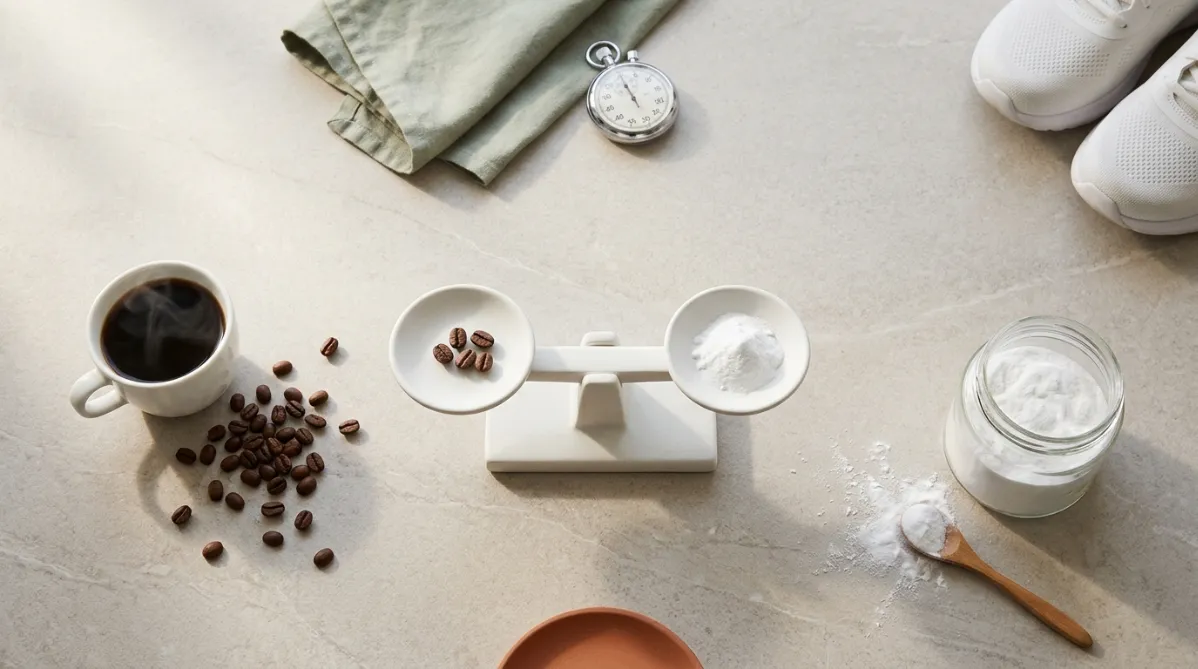
A calm, editorial-style flat lay photographed from above on a pale, warm-gray stone countertop in soft morning window light. On the left, a small white ceramic cup of black coffee with a delicate swirl of steam, beside a scattering of whole roasted coffee beans. On the right, a minimalist glass jar of fine white baking soda powder with a wooden spoon resting beside it, a few soft white grains dusted across the surface. In the center, a clean white scale-like balance made of matte ceramic with two small dishes: one holding a few coffee beans, the other a small mound of white powder, perfectly level to suggest the idea of equal outcomes. A folded sage-green linen napkin and a simple stainless steel stopwatch rest near the top edge, along with a pair of minimalist white running shoes partially visible in the corner. Subtle long shadows, gentle natural highlights, and a shallow depth of field give a tactile, premium feel. The color palette is muted and modern: cream, warm espresso brown, soft sage, and chalky white, with a single accent of pale terracotta in a small ceramic dish. Composition is balanced and uncluttered with generous negative space on the upper right for a title overlay. The overall mood is clean, contemporary, and quietly scientific, like a cover from a trendy health and performance journal. Wide landscape 16:9 framing, crisp detail, natural film-like grain.
nutrition

Caféine + bicarbonate de soude : le combo surpasse-t-il chaque ingrédient pris séparément ?

BY DR. GYMBRO ·

Combiner deux aides ergogéniques reconnues paraît être une garantie de performance, mais une méta‑analyse récente de 13 essais croisés montre que le calcul n’est pas si simple. Par rapport à un placebo, la combinaison caféine + bicarbonate de sodium a augmenté la puissance moyenne d’environ 8,4 W et réduit le temps d’épreuve de 1,6 %. Toutefois, ces effets disparaissent dès qu’on retire les études une à une, et le combo n’a pas surpassé la caféine ou le bicarbonate seuls. Voici ce que révèlent les données, quelles doses sont habituellement utilisées et qui devrait envisager ce mélange.
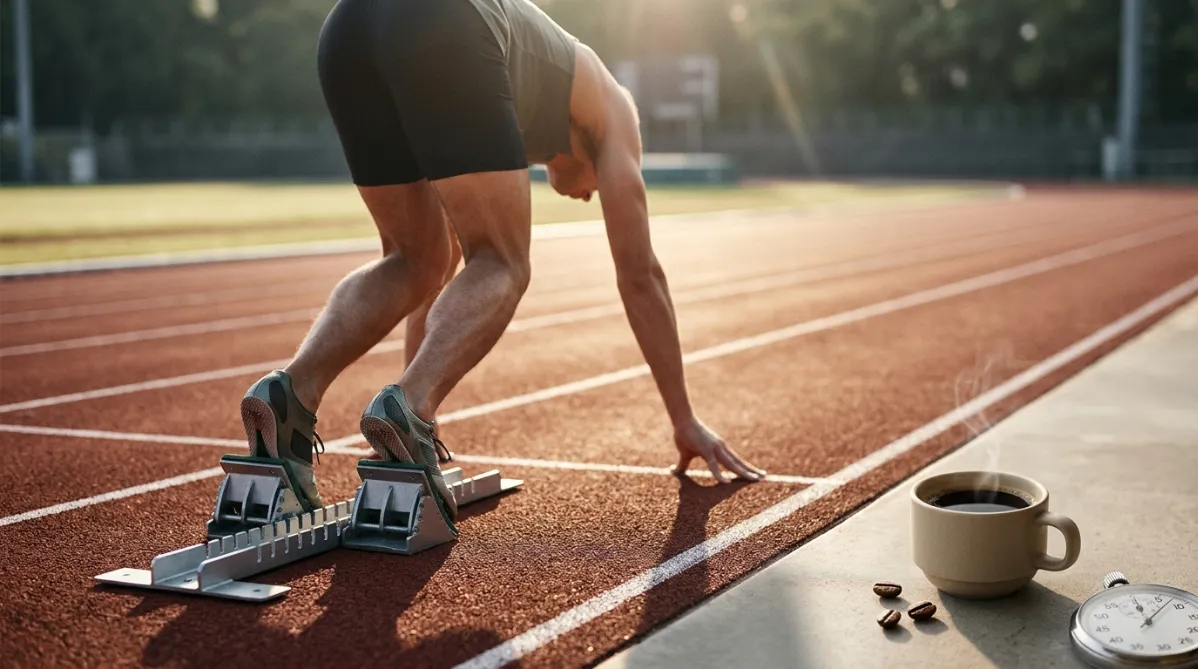
A wide, editorial-style photograph of a sprinter crouched in starting blocks on a deep terracotta-red running track, shot from a low angle at the side as the first morning light rakes across the lanes. The athlete is mid-set, hips lifted, hands poised behind crisp white lane lines, with a soft focus on their muscular calves and spiked shoes in the foreground. Warm golden sunlight creates long, elegant shadows and subtle lens flare, while the distant lanes fade into a creamy bokeh.

In the lower right foreground, slightly out of focus, sits a minimalist still life on a matte concrete ledge beside the track: a small ceramic cup of black coffee with a thin wisp of steam, two loose roasted coffee beans, and a simple stopwatch with a clean white face. The ceramic is a muted sand color, adding a refined, modern lifestyle touch.

The color palette is restrained and trendy: terracotta, warm cream, soft charcoal, and a hint of sage green from trees blurred in the far background. The composition uses generous negative space across the upper left, ideal for headline text overlay. The look is similar to a contemporary health and sports science magazine: natural film-like grain, gentle contrast, shallow depth of field, and a calm, focused mood. No text, no logos, no graphics, and no futuristic elements, just a realistic, tactile, sunlit scene that suggests precision, preparation, and explosive speed.
science research

Double de caféine, sprints plus rapides ? Ce que 6 mg/kg apporte réellement

BY DR. GYMBRO ·

Un essai randomisé, en double‑aveugle et en croisé, a comparé 3 mg/kg à 6 mg/kg de caféine chez 21 sprinteurs masculins entraînés. Les deux doses ont dépassé le placebo, mais la dose élevée n’a apporté de gain de vitesse supplémentaire que sur les 30 m et 60 m, pas sur les 10 m. Elle a également amélioré la hauteur de saut et le développement de la force au bloc, sans effet additionnel sur le temps de réaction ni sur la puissance maximale au test de Wingate. Voici ce que ces doses représentent en milligrammes pour un athlète de 70 à 80 kg, quand les prendre, à qui les résultats s’appliquent et ce que l’étude n’a pas indiqué concernant les effets indésirables.

A landscape editorial photograph in a bright, modern gym studio with soft natural light pouring through tall windows. In the foreground, a matte ceramic cup and a small glass jar of plain white powder sit on a light oak bench, with a wooden scoop resting beside them and a few loose grains dusted across the wood. The jar has no label, which hints at mystery without being heavy-handed. Slightly out of focus behind them, a female athlete in a sage green athletic set stands at a barbell, chalked hands gripping the bar, her expression calm and focused. A male cyclist on a stationary bike is blurred in the far background. The palette is warm neutrals: cream, soft sand, pale oak, muted sage, and a touch of terracotta, with gentle golden-hour highlights and soft shadows. The composition follows the rule of thirds, with the cup and jar in the lower left, the athlete on the right, and open negative space in the upper area for headline text. The depth of field is shallow, with a creamy bokeh background. The mood is contemplative, curious, and trendy, like a contemporary health and science magazine cover. Fine film grain, subtle matte finish, clean minimalist styling, and no text or logos.
science research

La fausse caféine rend les athlètes plus forts et plus rapides

BY DR. GYMBRO ·

Et si une partie de votre boost avant l’entraînement venait de votre tête plutôt que de la cuillère ? Une méta‑analyse de 2026 portant sur 17 études a montré qu’un placebo que les athlètes croyaient être de la caféine améliorait néanmoins la performance sportive (d = 0,49), que ce soit au développé couché, aux contre‑temps cyclistes ou aux sprints répétés. Les effets étaient plus forts lorsque les chercheurs étaient aveugles et dans les études incluant davantage de femmes, bien que les preuves soient de faible certitude et à haut risque de biais. Cela ne justifie pas d’abandonner la vraie caféine à 3‑6 mg/kg, mais cela rappelle que l’attente est elle‑même une variable de performance. Voici ce que disent les données et pourquoi il faut rester prudent.
A wide, editorial-style photograph of a single slim silver and blue energy drink can standing upright at center on a polished light-oak gym bench, shot in soft natural window light. The can is unbranded, with a clean, minimal design and a few beads of condensation. Behind it, the softly blurred interior of a bright modern indoor volleyball court stretches into the background, with a pale hardwood floor, a net, and a few volleyballs resting in a mesh cart. Warm morning sunlight enters through tall windows on the left and casts long, gentle shadows across the bench. Beside the can sit a small white towel folded neatly, a simple stopwatch, and a pair of white wireless earbuds. On the right, a small paper cup of white powder and a wooden scoop hint at measured dosing. They are placed deliberately, like a styled still life.

At the very edge of the frame, a pair of delicate white paper wings, origami-like and slightly crumpled, lie flat and unused on the bench, a subtle visual joke about the "wings" slogan. The wings are understated and tactile, not magical or glowing.

The color palette is muted and fresh: warm honey wood, soft cream, pale sky blue, and touches of silver, with a single accent of coral red from a volleyball panel in the background. The depth of field is shallow, with crisp focus on the can and the paper wings and a creamy bokeh background. The composition follows the rule of thirds, with the can slightly left of center and generous negative space on the right for a headline overlay. The mood is calm, clean, and contemporary, like a lifestyle and science magazine cover, with fine film grain and natural contrast. The camera angle is slightly low, at bench level, with a 50mm lens look.
nutrition

Le Red Bull vous donne-t-il des ailes ? 13 tests en salle n’ont rien trouvé

BY DR. GYMBRO ·

Le slogan de Red Bull promet des ailes, mais une récente étude croisée menée chez des joueuses de volley‑ball n’a rien décelé. Une canette standard n’a amélioré aucun des 13 paramètres testés (Wingate, saut, préhension) par rapport à un placebo. Huit des 15 sportives ont signalé une légère nausée. La raison la plus probable est que la dose de caféine était d’environ 1,1 mg/kg, bien en dessous des 3 à 6 mg/kg habituellement recommandés comme efficaces.
A landscape editorial still life on a pale warm-gray concrete surface, shot from a slightly elevated three-quarter angle in soft diffused morning window light. In the foreground left, a small open foil blister pack of mint-green caffeine gum sits beside two neatly arranged piles of gum pieces, one with three pieces and one with six, each on a small matte ceramic dish in oat and sage tones. The pieces are slightly glossy, rounded rectangles with crisp shadows. In the center-right, a worn leather basketball rests on the surface with deep amber-orange tones and visible pebbled texture. Next to it is a loosely chalked barbell collar and a single steel weight plate edge, partly out of focus. A minimalist analog stopwatch with a matte white face and a thin black hand lies at the lower right, and a slim notebook with a pencil rests nearby. The page shows a simple hand-drawn bar graph of two equal bars, with no legible text. In the soft-focus background, a blurred indoor basketball court with warm honey-colored hardwood and distant hoop lines fades into creamy bokeh. A narrow band of sunlight crosses the scene diagonally and picks out chalk dust particles in the air. The palette is muted and modern: sage green, warm oat, terracotta orange, charcoal, and cream. The composition leaves open negative space on the upper left for title overlay. Shallow depth of field, fine film grain, and a calm, clean magazine aesthetic like a contemporary health and science journal. No people, no text, no futuristic elements.
science research

Gomme à caféine et performance le jour même : pourquoi 3 mg/kg ont égalé 6

BY DR. GYMBRO ·

Une nouvelle étude croisée publiée dans le *Journal of the International Society of Sports Nutrition* montre que la gomme à caféine à 3 mg/kg améliore la force, la puissance, la vitesse de sprint et l’agilité réactive le jour même, presque autant qu’une dose de 6 mg/kg. Les deux doses ont également accru la vitesse de la barre pendant le « priming » du squat lourd. Au bout de 24 à 48 h, l’avantage avait complètement disparu. L’étude ne comportait ni test de référence préalable ni groupe ne recevant que de la caféine, ce qui impose une lecture prudente des résultats. Voici ce que cela implique en termes de dose, de timing et de publics susceptibles d’en profiter.
A wide, editorial-style photograph of a competition swimming pool lane seen from just above the water line at the starting end, in soft morning light. In the foreground, on the pool deck, a white ceramic espresso cup sits on the edge of a blue-gray starting block, a thin curl of steam rising from it. The cup is in crisp focus, with a few droplets of water on the textured non-slip deck around it. Behind it, the pool stretches into the distance as a series of calm lanes divided by red and white lane ropes. The turquoise water glints with gentle ripples and long, shimmering reflections. At the far end, a lone swimmer in a dark cap and goggles is mid-stroke, caught in a small burst of white splash, and slightly out of focus because of the shallow depth of field.

Large windows along the side wall let in pale golden sunlight, which throws soft diagonal light across the water and the deck. The palette is clean and modern: aqua, deep teal, warm cream and a small accent of coffee brown. The cup's warm tones stand out against the cool blues. The composition follows the rule of thirds, with the cup in the lower left third and open negative space of water and light on the right, leaving room for headline text. The look is minimal, airy and contemporary, like a high-end sports and science magazine, with subtle film grain, natural color grading, and a slightly desaturated, calm mood. Faint stopwatch-like details appear only as a thin black timing pad edge on the starting block, with no text or numbers visible. The overall feel is quiet anticipation just before a race, precise and fresh, with a sense of small margins and measured performance.
nutrition

La caféine rend les nageurs plus rapides, mais pas autant que vous le pensez

BY DR. GYMBRO ·

Les nageurs boivent du café avant les courses depuis des années, mais cela les rend‑t‑ils vraiment plus rapides ? Une nouvelle méta‑analyse multiniveau de 13 essais croisés estime le gain à environ 1,7 %, une marge décisive dans un sport où la victoire se joue à la centième de seconde. Le bénéfice le plus net apparaît à 6 mg/kg ou plus, alors que les doses plus faibles n’ont pas montré d’effet convaincant. La caféine augmente également le lactate sanguin post‑course, et les résultats varient fortement d’une étude à l’autre. Voici ce que les preuves soutiennent et ce qu’elles laissent en suspens.
A wide landscape editorial photograph shot from slightly above, showing a clean matte stone countertop in soft morning light. On the left, a single frosted glass tumbler of pale pink-orange watermelon-colored drink sits with condensation beads on its surface, a thin slice of watermelon resting beside it. In the center, a minimalist matte white scoop rests on a small pile of fine white powder, with a few grains scattered naturally across the surface. Behind it, a blurred matte sage-green supplement tub with no legible text stands slightly out of focus. On the right, a neat arrangement of gym elements: a rolled linen towel, a slim stainless steel water bottle, and a pair of worn white running shoes with soft shadows. A small brass balance scale sits at the far right edge, one pan slightly higher than the other, hinting at weighing evidence versus hype. Scattered across the counter are a few cut watermelon rind wedges in vivid green and coral pink, adding natural color accents.

The color palette is warm and restrained: cream, soft blush pink, sage green, and warm gray, with a single pop of coral. Light enters from a window on the left, casting long, gentle diagonal shadows and a subtle highlight on the glass. Shallow depth of field with creamy bokeh in the background. Composition leaves generous negative space across the upper third and right side for headline text overlay. Style resembles a modern wellness magazine or trendy health journal cover: calm, tactile, minimal, slightly muted film-like grain, natural textures such as linen, stone, and glass. No people, no text, no logos, and no futuristic elements.
supplements

Citrulline Malate : battage médiatique ou vraie aide ? Ce que révèlent 30 essais

BY DR. GYMBRO ·

La citrulline malate est un incontournable des pré‑workouts, mais que fait‑elle réellement ? Une méta‑analyse à trois niveaux regroupant 30 essais randomisés portant sur 644 personnes n’a trouvé qu’une légère amélioration globale des performances (g de Hedges = 0,16). Les intervalles de prédiction sont larges, le niveau de certitude GRADE est faible à très faible, et la perception de l’effort n’a pas bougé. Les doses aiguës semblent plus stables que les prises chroniques, et des signaux d’endurance aérobie ainsi que d’efforts anaérobies courts ont émergé, sans être robustes. Voici ce que cela implique pour le dosage, le timing et l’utilité réelle.
A wide landscape editorial still life on a pale warm-gray linen surface, shot from a slightly elevated three-quarter angle in soft diffused morning window light. At center-left, a tall clear glass filled with deep magenta-crimson beetroot juice catches the light, its edges glowing ruby with a few condensation droplets on the surface. Beside it sits a small white ceramic espresso cup with dark, glossy coffee and a delicate swirl of crema. A few roasted coffee beans are scattered casually near the cup's saucer. To the left, two whole raw beetroots with their leafy burgundy-veined greens still attached rest on a rustic wooden board, with one beet sliced in half to reveal concentric rings of vivid fuchsia and pale pink. A folded white judo gi sleeve with a worn black belt loosely coiled on top is draped along the right side of the frame, the cotton weave texture visible, hinting at the sport without any people. In the background, a soft-focus tatami mat texture in muted straw-green creates a subtle horizontal band, blurred into creamy bokeh. A small scattering of beet juice droplets and a faint magenta stain on the linen add an organic, lived-in touch. The palette is restrained and modern: magenta, espresso brown, off-white, muted sage, and warm beige. Composition leaves generous negative space on the upper right for headline overlay. The mood is clean, calm, and contemporary, like a premium health and science magazine cover, with shallow depth of field, crisp focus on the glass and cup, fine natural shadows, and subtle film-like grain.
nutrition

Jus de betterave + caféine : la combinaison du judo qui dépasse la caféine seule

BY DR. GYMBRO ·

La caféine est le stimulant de prédilection avant un combat, mais une nouvelle étude randomisée menée auprès de 35 judokas montre que son avantage s’estompe dès le cinquième round d’une journée de compétition simulée. Le jus de betterave, en revanche, apporte un bénéfice tardif, et la combinaison des deux couvre les performances du début comme de la fin. Au cinquième test, le jus de betterave seul et le mélange ont surpassé la caféine seule en termes de forme spécifique au judo, de fonction neuromusculaire et de cognition. Voici ce que l’étude révèle, à qui elle peut être utile, qui doit rester prudent et ce que le résumé ne mentionne pas.
A bright, airy editorial photograph in landscape format of a clean white marble kitchen counter in soft morning light. On the left, a small rustic ceramic bowl holds a mound of fine white powder, with a wooden spoon resting beside it and a scattering of powder dusted across the marble. Next to it sits a glass of water with a faint ripple on its surface. In the middle ground, a simple breakfast spread: a bowl of oatmeal topped with sliced banana, a piece of toast with honey, and a few slices of white bread, all styled in muted, natural tones. A minimalist analog wall clock or a vintage round kitchen timer in matte sage green sits subtly in the background, hinting at the 90-minute timing.

On the right side of the frame, slightly out of focus, a pair of modern running shoes in soft coral and cream rests on a light oak floor or bench. Next to them are a folded running shirt and a slim sports watch. Through a large window behind the counter, a blurred sunlit tree-lined running path glows in warm golden light, suggesting a woman's morning run without showing a face.

The palette is soft and modern: warm whites, sage green, pale peach, light wood, and touches of coral. Shallow depth of field, gentle natural shadows, and a clean composition with generous negative space in the upper left for title overlay. The mood is fresh, trustworthy, and health-journal chic, like a high-end wellness magazine feature. Shot on a 50mm lens, crisp details, subtle film grain, and a calm, minimal, contemporary feel.
nutrition

Le bicarbonate de soude fait gagner 32 secondes aux femmes sur le 10 km – le piège

BY DR. GYMBRO ·

Un composé bon marché du garde‑manger a permis aux coureuses amateurs de gagner environ 32 secondes sur un 10 km, et les troubles gastriques qui l’accompagnent habituellement sont à peine apparus. Dans un essai croisé en double‑aveugle, 21 femmes ont couru plus vite après avoir pris du bicarbonate de sodium. Le truc ? L’associer à un repas riche en glucides 90 minutes avant la course. Voici le dosage, le timing, à qui cela convient et qui devrait y réfléchir à deux fois.
A wide, editorial-style flat lay photographed from above on a pale oat-colored linen surface in soft morning window light. On the left, a small matte white ceramic cup of black coffee with a delicate swirl of steam, beside a few scattered roasted coffee beans. On the right, a second matte sage-green ceramic cup holding a pale, creamy golden tea-like drink, mirroring the first. Between them, two small glass vials with cork stoppers sit side by side: one holding fine white powder, the other holding slightly warmer cream-colored powder, with a tiny brass measuring spoon resting nearby. In the lower foreground, a slim wooden rowing oar lies diagonally across the frame, its blade edge softly entering from the right, painted a muted navy with a thin terracotta stripe. A minimalist analog stopwatch with a brushed-steel case rests near the oar, and a folded cream notebook with a thin pencil suggests data-taking. In the upper corner, a crescent-shaped dried eucalyptus sprig and a small folded gray wool throw hint at sleep and calm without being literal. The palette is warm and restrained: oat, cream, sage, soft navy, terracotta, and espresso brown. Shadows are long and gentle, with shallow depth of field and subtle film grain, giving a refined, modern wellness-magazine feel. Generous negative space on the left third of the composition leaves room for a headline overlay. Clean, calm, tactile, and contemporary, with no text, logos, or futuristic elements.
science research

Paraxanthine vs Caféine : le combo gagnant et le sauveur du sommeil

BY DR. GYMBRO ·

La paraxanthine, principal métabolite de la caféine, a récemment été testée côte à côte avec la caféine dans une étude menée auprès de 14 rameurs. Le mélange de 200 mg de chaque substance a surpassé le placebo sur 2000 m, mais l’effet était faible (d = 0,30). Aucun des deux composés pris séparément n’a clairement amélioré la performance, tandis que la paraxanthine prise seule semblait plus favorable du point de vue du sommeil subjectif. Voici les chiffres, leurs limites, et qui pourrait réellement en bénéficier.
A wide editorial still life on a pale, warm-toned concrete surface in soft morning window light. In the center-left, a shallow matte ceramic bowl holds a small pile of bright red coffee cherries with glossy skins, a few sliced open to reveal pale mucilage and paired green-tan beans. Beside it, a small glass dish of fine, golden-brown powdered extract with a tiny wooden scoop resting on its edge. A sprig of coffee plant leaves, deep green and waxy, arcs across the foreground.

On the right side, slightly out of focus, a sleek road cyclist's handlebar and a matte black water bottle lean against a light plaster wall, suggesting athletic training without showing a person. A minimalist analog stopwatch with a clean white face and thin black hands sits in the mid-ground, angled toward the camera, its hands paused near the fifteen-minute mark. A folded linen cloth in oatmeal beige and a single small espresso cup with a thin crema ring add quiet texture.

The color palette is restrained and modern: cherry red, sage green, cream, soft terracotta, and charcoal accents. Light comes from the left, casting long, gentle shadows with a subtle warm glow and a hint of dust in the air. Shallow depth of field with crisp focus on the cherries and stopwatch, creamy bokeh in the background. Composition leaves open negative space in the upper right for a headline overlay. The overall feel is a clean, trendy health-and-science magazine cover: tactile, natural, minimal, and calm, shot in a 16:9 landscape frame with fine film-like grain and true-to-life tones.
nutrition

Extrait de cerise de café : 200 mg de caféine augmentent la puissance cycliste de 4,6 %

BY DR. GYMBRO ·

Une dose modeste de 200 mg de caféine provenant d’un extrait complet de cerise de café a permis à des cyclistes entraînés de produire 4,6 % d’effort supplémentaire lors d’un contre‑la‑montre de 15 minutes. En revanche, l’idée largement répandue selon laquelle cela accélérerait le rechargement du glycogène n’a pas été confirmée. Cette étude randomisée, en double‑aveugle et en cross‑over, n’a impliqué que 12 cyclistes et a été financée par l’industrie, sans groupe de comparaison à la caféine pure. Voici ce que les données montrent, ce qu’elles ne montrent pas, et qui pourrait être intéressé à l’essayer.
A sleek aluminum energy drink can and a matte scoop of white pre-workout powder sit side by side on a pale concrete gym bench, lit by soft morning window light. The can is slim and minimalist, with a muted sage green label and no legible text. Beside it is a clear glass shaker half full of cloudy, lightly frothy liquid with condensation beading on its surface. A few fine grains of powder are scattered across the bench, catching the light. Behind them, slightly out of focus, a stainless steel barbell rests on a rack, and a folded charcoal gym towel sits at the edge of the frame.

The color palette is warm neutral: oatmeal, soft gray, and sage, with a single accent of pale citrus yellow from a halved lemon wedge placed near the glass. A thin, elegant shadow from the window blinds falls diagonally across the scene, giving it an editorial, magazine-style rhythm. The composition leaves generous negative space on the right third of the frame, a smooth blurred wall in warm off-white, suitable for headline text overlay.

The shot is a low-angle, shallow depth-of-field product-style photograph, as if taken with an 85mm lens at f/2. The foreground objects are tack sharp and the background melts into creamy blur. The mood is calm, clean, and modern, like a wellness or science journal feature. Subtle film grain and gentle contrast add a tactile, contemporary lifestyle feel. There are no people, no logos, and no futuristic or sci-fi elements, just a quiet, considered still life that suggests the choice between a canned drink and a scooped supplement.
nutrition

Votre boisson énergétique peut agir comme un pré‑workout – mais il y a un hic

BY DR. GYMBRO ·

Caféine et taurine sont souvent associées dans les boissons énergisantes et les pré‑workouts, mais cette combinaison améliore‑t‑elle réellement la performance ? Une méta‑analyse récente de 11 essais randomisés (234 participants) montre des gains modérés en puissance maximale et en temps d’épuisement, ainsi qu’une perception d’effort moindre. Le rythme cardiaque n’a pas bougé et les résultats sur le temps de réaction restent trop variables pour être fiables. Le problème, c’est que les études sont petites et ne permettent pas de conclure que la taurine apporte quelque chose de plus que la caféine.
A bright, minimalist flat-lay photograph of two supplement scoops on a pale warm-gray stone surface, shot from directly above in soft natural window light. On the left, a matte ceramic scoop holds fine white creatine monohydrate powder, heaped in a clean mound. On the right, a second scoop of the same shape holds slightly coarser off-white beta-alanine powder, with a small, deliberate gap between the two. Each scoop sits in its own soft shadow, which suggests separation rather than combination. Between them, a thin brushed-brass ruler or a single slim line of fine powder runs across the surface and subtly divides the composition.

Around the scoops, a few restrained props in a muted editorial palette of sage green, cream, terracotta, and soft charcoal: a small glass jar with a minimalist label that has no readable text, a folded linen napkin, a single sprig of eucalyptus, and a stainless-steel shaker bottle softly out of focus in the upper corner. A few loose powder grains are scattered naturally across the stone. A small stack of blank cream index cards with a pencil rests in the lower right, hinting at research and note-taking without any legible writing.

The composition follows a clean rule-of-thirds layout, with generous negative space on the right third for headline overlay. The lighting is gentle and diffused, with long, soft shadows falling to the lower left. The color grading is calm and slightly desaturated, with creamy highlights and a subtle film-like grain. The overall look is a modern wellness and science journal cover, with an airy, trustworthy, contemporary editorial feel, shallow depth of field, and crisp detail on the powders.
nutrition

Créatine + Bêta‑alanine : le prétendu avantage du combo que les chercheurs n’ont pas confirmé

BY DR. GYMBRO ·

Le duo créatine + bêta‑alanine est souvent présenté comme le combo miracle pour la performance, mais une méta‑analyse en réseau portant sur 52 essais randomisés n’a détecté aucune synergie entre les deux. La créatine seule a nettement amélioré le sprint, le saut, les efforts répétés et l’endurance du haut du corps par rapport à un placebo. Les effets de la bêta‑alanine étaient non significatifs ou dépendants du contexte, et le mélange n’a rien apporté de plus que la créatine. Voici comment l’étude a été menée, ses limites, et ce que cela implique pour votre budget de compléments.
A landscape editorial photograph with a modern, clean magazine feel, shot on a pale warm-gray concrete surface in soft natural window light from the left. In the foreground, two matte white ceramic espresso cups sit side by side. The left cup holds a small amount of dark espresso with golden crema. The right cup is filled twice as high. Beside them, two small stainless steel scoops hold fine coffee-colored powder, one half full and one heaped, suggesting a dose comparison without any text or labels. A pair of worn red leather boxing gloves rests slightly out of focus behind the cups, laces loosely draped, with a white hand wrap rolled neatly beside them. A minimalist digital kitchen scale in matte black sits at the edge of the frame, with a few roasted coffee beans scattered across the surface. In the soft-focus background, a boxing gym corner appears: a hanging heavy bag in muted charcoal, pale wood plank flooring, and a tall window with diffused morning light. The palette is warm cream, espresso brown, brick red, and soft slate gray, with gentle shadows and a shallow depth of field. The composition follows the rule of thirds, with the cups and scoops in the lower left third and open negative space on the right for headline overlay. The look is tactile and refined, like a high-end health and performance journal. It has natural grain, subtle contrast, and a calm, confident mood. There are no people, no text, no logos, and no futuristic elements.
nutrition

Doubler votre caféine n’a guère aidé les boxeurs — voici ce qui a réellement fonctionné

BY DR. GYMBRO ·

Vous pensez qu’une double dose de pré‑entraînement signifie une performance doublée ? Une étude croisée menée sur 15 boxeurs de haut niveau a comparé 3 mg/kg et 6 mg/kg de caféine ; la dose la plus élevée n’a pas été systématiquement meilleure. Les deux dosages ont amélioré la hauteur du saut et la puissance à 60 minutes, tandis que 6 mg/kg ne s’est démarquée que sur quelques paramètres comme la puissance du push‑up balistique et le couple du genou. Vous trouverez ci‑dessous le tableau de conversion mg / kg, le timing recommandé et les réserves importantes, dont le fait que le coup de poing n’a jamais été testé.
A wide, editorial-style still life shot from a slightly elevated angle on a pale oak gym bench, bathed in soft morning window light. In the center sits a matte ceramic cup of black coffee with delicate steam curling upward, flanked by a small white scoop of coffee beans and two identical glass vials, one filled with a few grains of fine powder and one empty, hinting at dose comparison. Next to the cup rests a pair of worn white boxing hand wraps, loosely coiled, and a slim black stopwatch with its face softly visible. In the foreground, a minimalist notebook lies open with blurred handwritten numbers and a simple pen sketch of a bar graph with bars of equal height, subtle and unreadable, suggesting a null result without any legible text. A small brass kitchen scale sits to the side with a few coffee beans on its tray.

In the soft-focus background, a boxing gym interior is visible: a hanging heavy bag in muted charcoal, exposed brick wall painted off-white, and tall windows casting long diagonal light across the floor. The color palette is warm and restrained: cream, sand, espresso brown, soft charcoal, with a single accent of muted terracotta orange in the hand wraps and a faint sage green in the notebook cover. Shallow depth of field with creamy bokeh, fine film grain, and gentle shadows give it a contemporary lifestyle-magazine and wellness-journal feel. The composition leaves generous negative space on the left third for headline overlay. Clean, calm, trendy, and tactile, with natural textures like wood grain, ceramic glaze, and cotton fabric. No people, no text, no futuristic elements.
science research

Le café à faible dose de caféine n’améliore pas les sprints chez les combattants d’élite

BY DR. GYMBRO ·

Vous pensez que votre café pré‑entraînement booste vos sprints ? Une étude randomisée, en double‑aveugle et croisée, menée chez 15 athlètes de combat de niveau national n’a trouvé aucun bénéfice de performance avec des doses de caféine de 1,5 et 3 mg/kg (environ 100 et 200 mg pour un athlète de 68 kg). La puissance maximale, la puissance moyenne, l’indice de fatigue et les contributions estimées des systèmes énergétiques ne diffèrent pas du décaféiné. Il s’agit toutefois d’un petit résultat nul, pas d’une preuve que la caféine échoue, et la plupart des études positives utilisent des gélules à 3–6 mg/kg. Voici le calcul des doses, les limites et ce qu’il faut réellement faire avant votre prochaine séance intense.
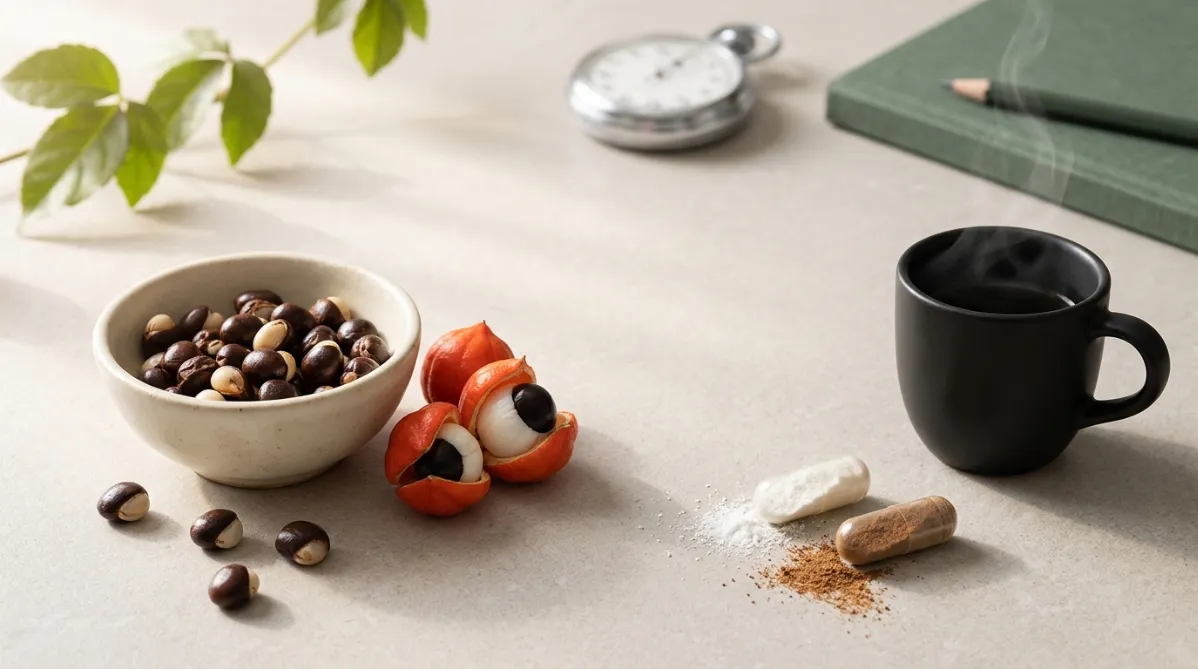
A wide, softly lit editorial flat-lay on a pale warm-gray stone countertop, shot from slightly above. On the left, a small rustic ceramic bowl in matte cream holds a handful of dried guarana seeds, dark glossy brown with pale cream arils, a few spilling onto the surface. Beside it sits a halved fresh guarana fruit in vivid red-orange, split open to show the white flesh and black seed inside, looking like a tiny eye. On the right, two open clear capsules rest side by side. One is filled with fine white caffeine powder, the other with a fine earthy brown guarana powder, and a little of each dusts the stone in delicate, deliberate lines. Between them, a minimalist matte-black espresso cup with a thin ribbon of steam rises on the right edge of the frame. A brushed-steel stopwatch and a slim dark-green linen notebook with a pencil sit in the upper background, slightly out of focus, to hint at performance testing without clutter. A few green leaves of a guarana vine curve in from the top-left corner, catching soft light.

The lighting is natural window light from the left, with gentle long shadows and a subtle warm highlight on the seeds. The palette is muted and modern: warm creams, terracotta red, deep espresso brown, sage green, and charcoal accents. The background is clean with generous negative space on the upper right for headline text. Shallow depth of field, crisp focus on the seeds and capsules, fine grain, and a calm premium magazine look like a contemporary wellness and sports-science journal. No people, no text, no logos, no futuristic elements.
science research

Guarana vs caféine : à même dose, seul le guarana augmente la puissance maximale

BY DR. GYMBRO ·

Même dose de caféine, capsule différente, et seul le guarana a entraîné une hausse statistiquement significative de la puissance maximale. Dans un essai croisé randomisé chez 18 hommes actifs, le guarana a fait grimper la puissance de pointe de 4 % par rapport au placebo, alors que la caféine anhydre n’a pas atteint la significativité. Mais le guarana n’a pas surpassé la caféine en comparaison directe, les écarts restant descriptifs. Voici les chiffres, les limites de l’étude, et comment doser le guarana en fonction de sa teneur en caféine si vous souhaitez l’essayer.
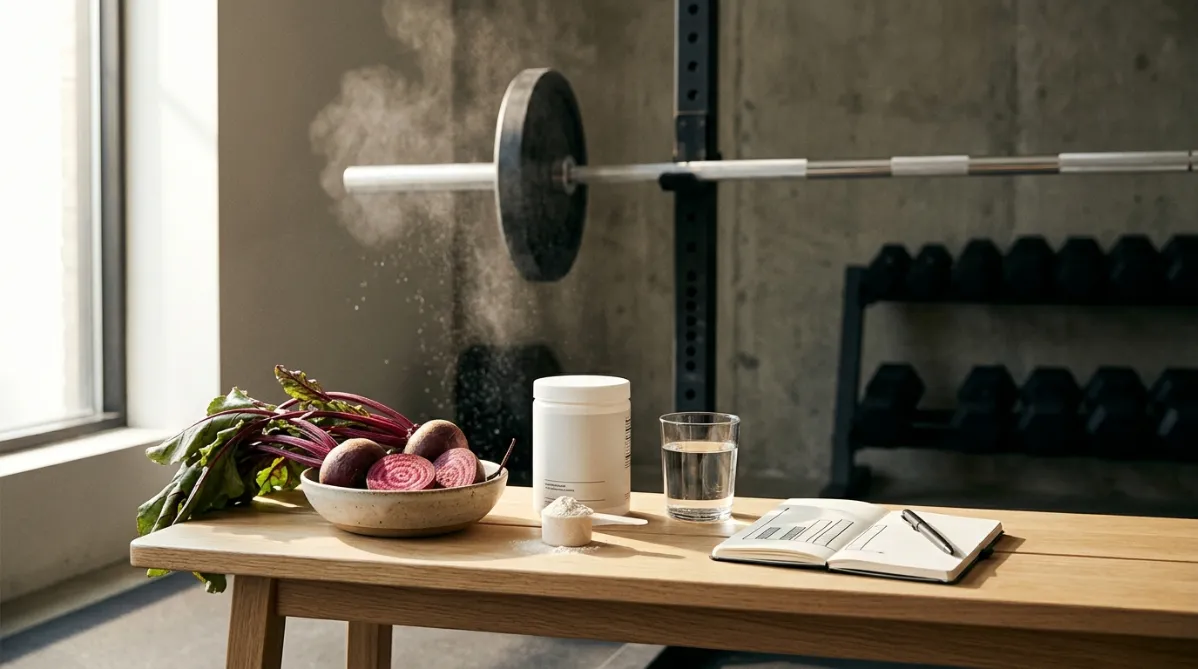
A sun-lit editorial still life on a pale oak gym bench: a loaded barbell rests on a rack just above it, chalk dust drifting in the air. In the foreground sits a small ceramic bowl of roasted beets, some sliced to show their deep magenta rings, with a few whole beets still wearing their leafy burgundy stems. Next to the bowl is a matte white supplement tub with a minimal label, a wooden scoop of fine white powder, and a clear glass of water catching soft highlights. A slim notebook lies open beside them with a simple hand-drawn bar graph and a pen, suggesting data and analysis without any readable text. Behind the bench, a softly blurred minimalist training space: raw concrete wall, tall window with warm morning light, a rack of black dumbbells fading into bokeh. The palette is earthy and modern: beet magenta, warm cream, charcoal, brushed steel, and touches of sage green from the beet leaves. Soft directional light from the left creates long gentle shadows and a slight film-grain texture. Shallow depth of field keeps the beets and powder tack sharp. The composition is wide and balanced, with negative space on the right for headline overlay. The overall feel is a clean, contemporary health and fitness journal photograph, warm and tactile, with an understated scientific tone.
nutrition

La bêtaïne augmente la puissance du bench‑throw d’environ 16 % en 14 jours

BY DR. GYMBRO ·

Deux semaines de supplémentation en bêtaïne, un composé dérivé de la betterave commercialisé sous le nom de TMG, ont entraîné une hausse d’environ 16 % de la puissance au bench‑throw dès le premier jour d’un bloc d’essai intensif chez des hommes pratiquant la musculation. Un essai randomisé, double‑aveugle et croisé a également montré une force isométrique au développé couché accrue, ainsi que des améliorations plus modestes de la puissance du saut vertical et de la force isométrique au squat. En revanche, le nombre de répétitions et la puissance du squat‑jump sont restés stables, et l’étude ne comptait que 12 participants. Voici les données, la dose utilisée et ce que les haltérophiles peuvent vraiment en déduire.
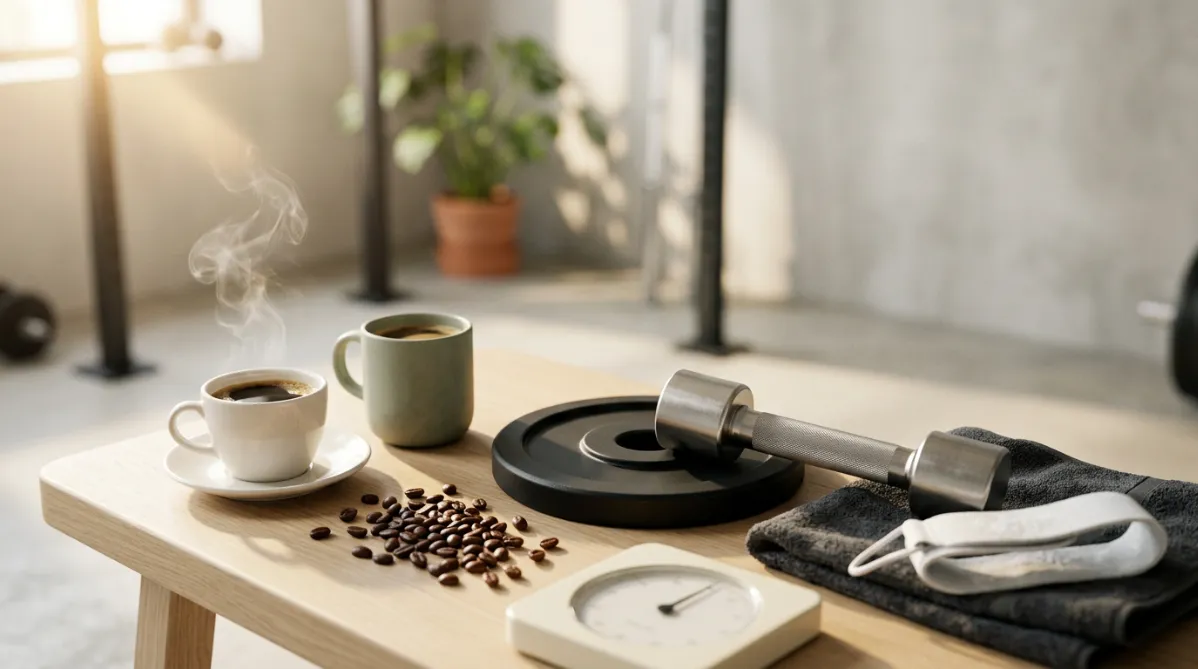
A wide, editorial-style flat lay photographed from slightly above on a pale oak gym bench with a soft matte finish. On the left, a small white ceramic cup of black coffee sits on a matching saucer, with a thin curl of steam rising and catching warm window light. Beside it is a second, slightly larger handleless stoneware mug in muted sage green, also filled with coffee, so the pair suggests one to two cups. In the center-right foreground rests a sleek matte-black steel barbell plate, partly overlapping a brushed-steel dumbbell with fine knurling. A folded charcoal gym towel and a clean white chalk-dusted wrist strap lie casually to one side. A small scatter of whole roasted coffee beans spills across the bench in front of the cups, glossy and deep brown. Near the bottom edge, a minimalist analog kitchen scale in soft cream with a thin black needle hints at precise dosing, without any readable numbers or text.

Soft morning sunlight streams in from the upper left, creating long, gentle shadows and a warm golden glow against cool neutral tones. The background is a softly blurred, airy home gym or boutique training studio with out-of-focus squat rack uprights, pale concrete walls, and a leafy green plant in a terracotta pot adding a touch of organic color. The palette is restrained and modern: warm cream, espresso brown, charcoal, sage green, and hints of brushed silver. Shallow depth of field keeps the cups and beans tack sharp while the background melts into creamy bokeh. The composition leaves generous negative space on the right third for a title overlay, with a balanced, calm, premium magazine feel, like a contemporary wellness and sports science journal. High-resolution, natural color grading, subtle film grain, realistic textures on ceramic, steel, and coffee crema.
nutrition

Quel dosage de caféine avant de soulever ? Une méta‑analyse montre que 1–2 mg/kg suffisent

BY DR. GYMBRO ·

Le dosage habituel de caféine avant une séance de musculation est de 3 à 6 mg/kg, soit plusieurs tasses de café ou une forte dose de pré‑entraînement. Une méta‑analyse de 2022, portant sur 12 essais, a montré que même 0,9 à 2 mg/kg amélioraient la force (d ≈ 0,17), l’endurance (d ≈ 0,21) et la vitesse moyenne de la barre (d ≈ 0,56). Pour la plupart des pratiquants, cela correspond à une ou deux tasses de café. Les effets restent modestes et proviennent d’études aiguës, mais ils suggèrent qu’on peut obtenir un bénéfice comparable avec beaucoup moins de caféine.
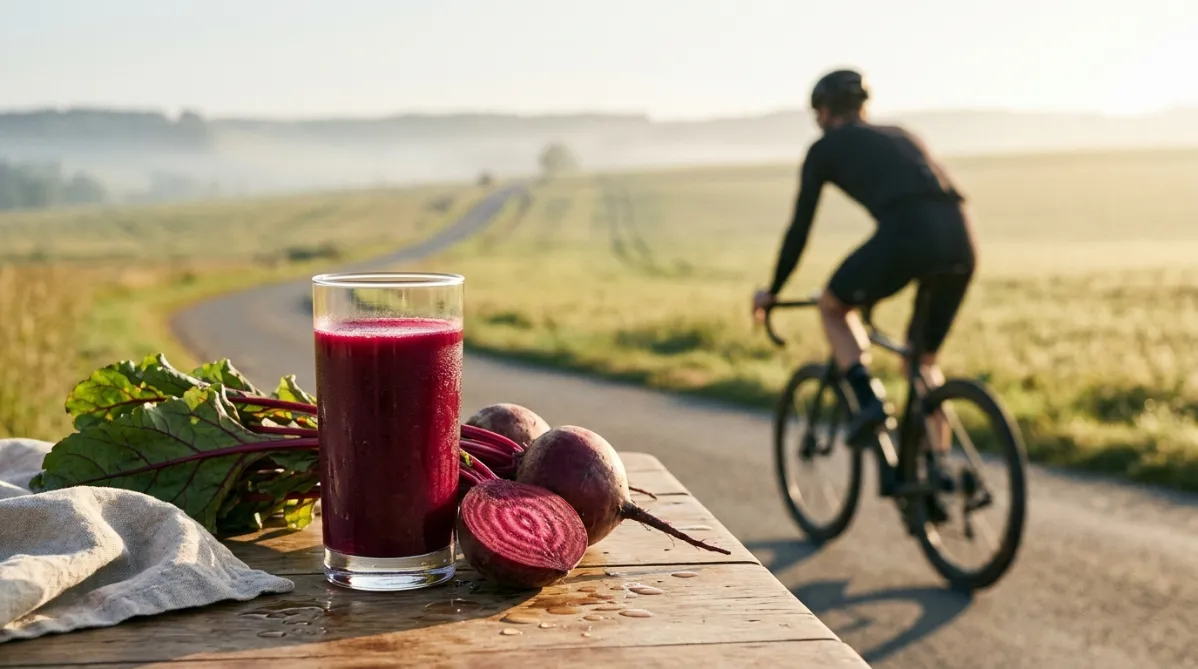
A cyclist in a fitted matte-black kit, shot from a low three-quarter angle, rides a sunlit country road at early morning, slightly out of focus with soft motion blur on the wheels. In the foreground on the left sits a rustic wooden table with a tall glass of deep magenta beetroot juice. Condensation beads on the glass, and the light catches its vivid jewel-toned color. Beside it lie two whole beetroots with their leafy red-veined greens still attached, and one halved beet shows concentric crimson-and-pink rings. A small linen napkin and a scatter of water droplets add an editorial still-life feel.

The background is a gently rolling landscape with golden-green fields and a thin ribbon of asphalt curving toward the horizon. Pale mist hangs low and warm sunlight comes from the right, creating long soft shadows and a golden rim light on the glass and the cyclist's silhouette. The shallow depth of field keeps the juice and beets crisp while the rider stays a dreamy blurred suggestion of speed.

The palette is rich magenta, burgundy, warm cream, sage green, and soft gold, with muted, slightly desaturated tones in the background so the beetroot color stands out. The composition follows the rule of thirds, with the still-life in the lower left third and open negative space in the upper right for the title. The overall look is a clean, modern lifestyle-magazine photograph with natural film-like grain, calm and athletic, and no text, logos, or futuristic elements.
nutrition

Jus de betterave avant un contre-la-montre : comment un demi‑litre a réduit de près de 3 % les temps sur 4 km et 16,1 km

BY DR. GYMBRO ·

Une petite étude croisée menée en 2011 a testé si un demi‑litre de jus de betterave pouvait accélérer les contre‑la‑montre de cyclistes compétitifs. Neuf hommes ont bu 0,5 L de jus riche en nitrate (environ 6,2 mmol) 2,5 h avant la course. Le nitrite plasmatique a plus que doublé, la puissance moyenne a augmenté et les temps sur 4 km et 16,1 km se sont améliorés de 2,8 % et 2,7 % respectivement, sans modification du VO₂. Ces résultats suggèrent surtout une meilleure économie de pédalage plutôt qu’une hausse de la capacité aérobie. Voici le protocole, les chiffres et les limites de ces données.
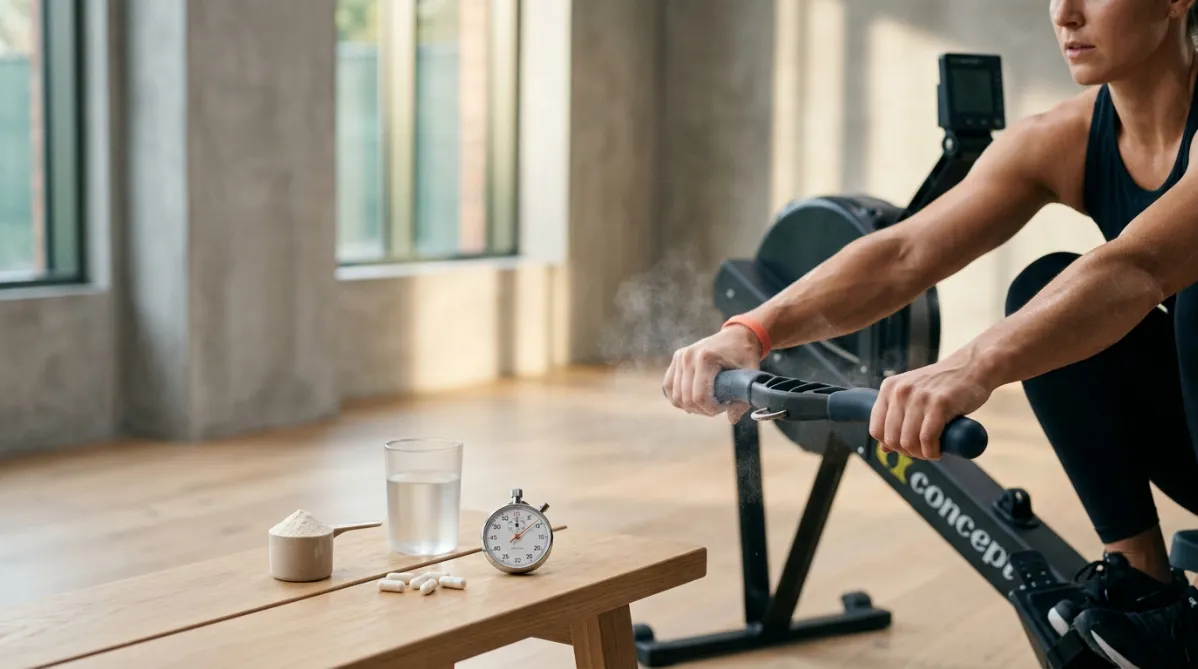
A wide, minimalist editorial scene of an athlete's hands and forearms gripping the handles of a rowing ergometer, shot in soft natural light from a large window in a clean, airy training studio. The athlete is mid-pull, forearm muscles subtly defined, a light sheen of sweat on the skin, chalk dust floating in the air. In the foreground on a pale oak bench sits a small ceramic scoop of fine white powder beside a matte glass of water, with a few loose white capsules arranged neatly in a gentle curve. A minimalist analog stopwatch with a clean white face lies next to them, its hand paused near the two-minute mark.

The color palette is calm and modern: warm off-white, soft sand, muted sage green, and a single accent of coral orange in the stopwatch hand and the rower's wristband. The background is softly blurred concrete and pale wood with long, gentle shadows stretching across the floor. Shallow depth of field keeps the hands, powder, and stopwatch crisp while the rest dissolves into creamy bokeh.

Composition follows the rule of thirds: the rowing handles and hands occupy the right third, the bench still life sits in the lower left, and open negative space in the upper left leaves room for a title overlay. The mood is focused, quiet, and intentional, like a high-end health and science journal feature. Fine film grain, subtle matte finish, editorial photography style, natural color grading, and no text or logos.
nutrition

La bêta‑alanine fonctionne‑t‑elle ? Une méta‑analyse confirme son efficacité pour les efforts de 60 à 240 secondes

BY DR. GYMBRO ·

La bêta‑alanine est souvent présentée comme le moyen de retarder la sensation de brûlure liée à un effort intense, mais délivre‑t‑elle réellement ses promesses ? Une méta‑analyse de 15 études, portant sur 360 participants, a mis en évidence un bénéfice réel mais modeste, avec un gain médian de 2,85 %. L’effet était le plus net pour les efforts de 60 à 240 secondes, s’atténuant au‑delà de quatre minutes et absent pour les sprints de moins d’une minute. L’article détaille également le protocole de charge habituel (3,2 à 6,4 g /jour pendant au moins quatre semaines), les moyens de limiter les fourmillements en fractionnant les doses, et les athlètes qui peuvent le plus en bénéficier.

This page is available in